B2C App
User Research & Analysis
UX + UI
0 → 1 Design
Product Strategy
User Testing and A/B tests
Design Iterations
This app is designed to be ‘Longevity Companion’ to encourage healthy habits for people with chronic conditions, supporting lifestyle change and long-term risk reduction. Forming healthy habits with tools and insights that feels achievable and supportive for variable and declining capacity. This solution is developed with the guidance of trusted NHS health care experts to keep it grounded in clinical workflows. Key features include goal setting, progress tracker with AI insights to help with positive behaviour change.


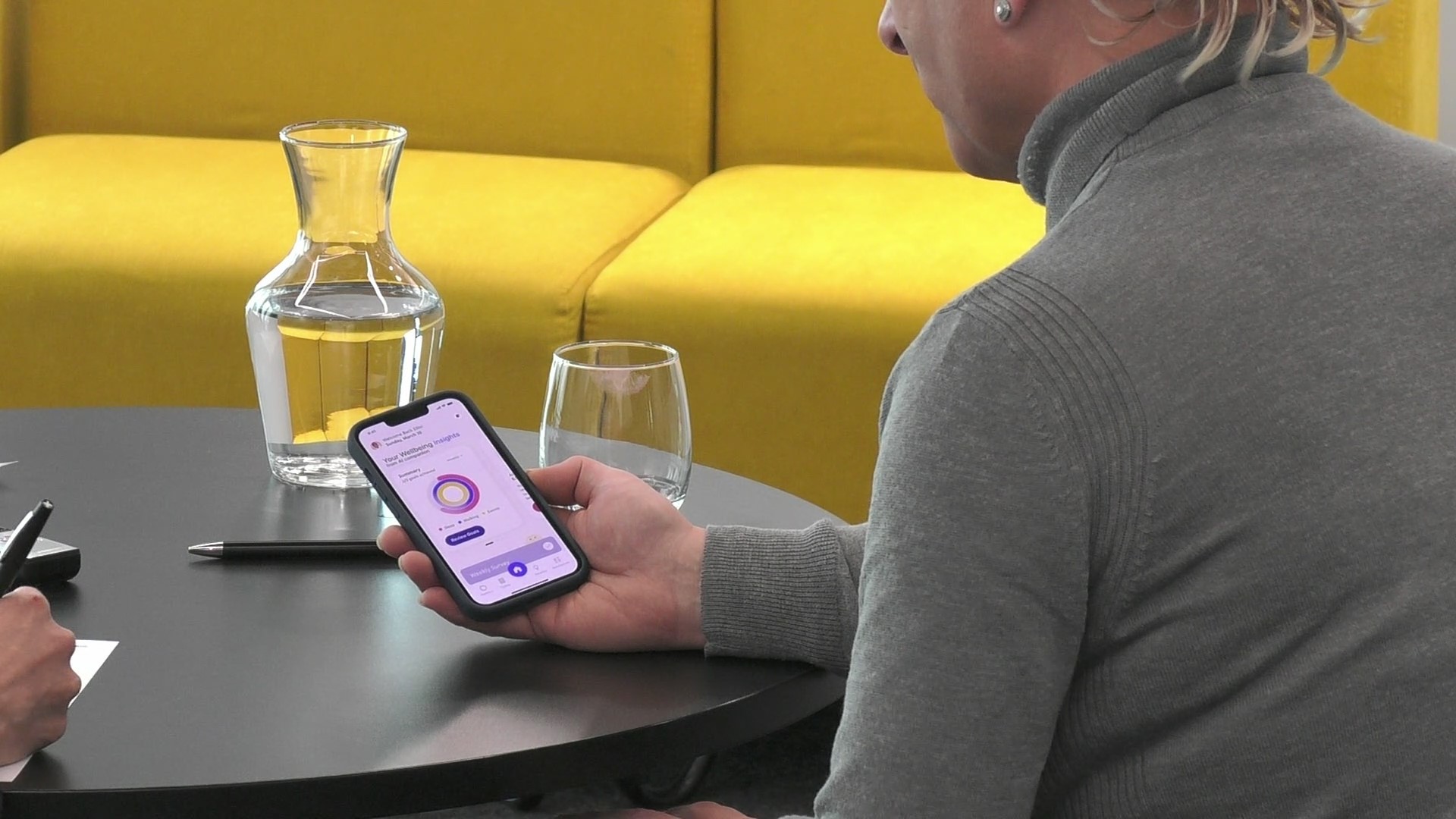
🔒 Confidentiality notice: Please note, some project details are subject to confidentiality agreement including company name, AI data and full UX journey cannot be publicly shared until the app is launched. Confidential designs, AI-related information and research findings have been generalised or modified.
The Real Problem
How might we design a low-friction digital product for healthy habits
20%, or 1 in 5 GP appointments are for non-clinical reasons
Target Users
Non-Wearable Customers
Dissatisfied Wearable Customers
We focused on people who feel dissatisfied with health metrics provided by existing solutions in the market. They are seeking clarity and confidence with easy to understand insights that support healthy habits.
MVP Scope
In scope
Onboarding, Goal Setting, Tracking Progress
Non goals
Clinician-facing dashboard, Medical diagnosis
I proposed to get an intial review from NHS healthcare experts to understand how this app can fit within clinical system. This helped us to identify what is the project scope, why personalised insights will be helpful and how it can be implemented in the regulated system.
Product Strategy
Turning barriers into opportunities
Design Thinking Workflow
108 respondents shared their experience with existing solutions and their unmet needs
Co-creation
Facilitated a workshop with healthcare experts, product owner & engineer to understand the opportunity and align priorities
Focus Group
Facilitated a workshop with 20 target users to uncover coree needs and create wireframe concepts together
Design Scoping
Define two hypotheses with stakeholders, fleshed out core app features and user flow
Design Phase 1
Rapid UX mockups -> UI design -> prototyping of core screens for first use and regular engagement
Usability Testing 1
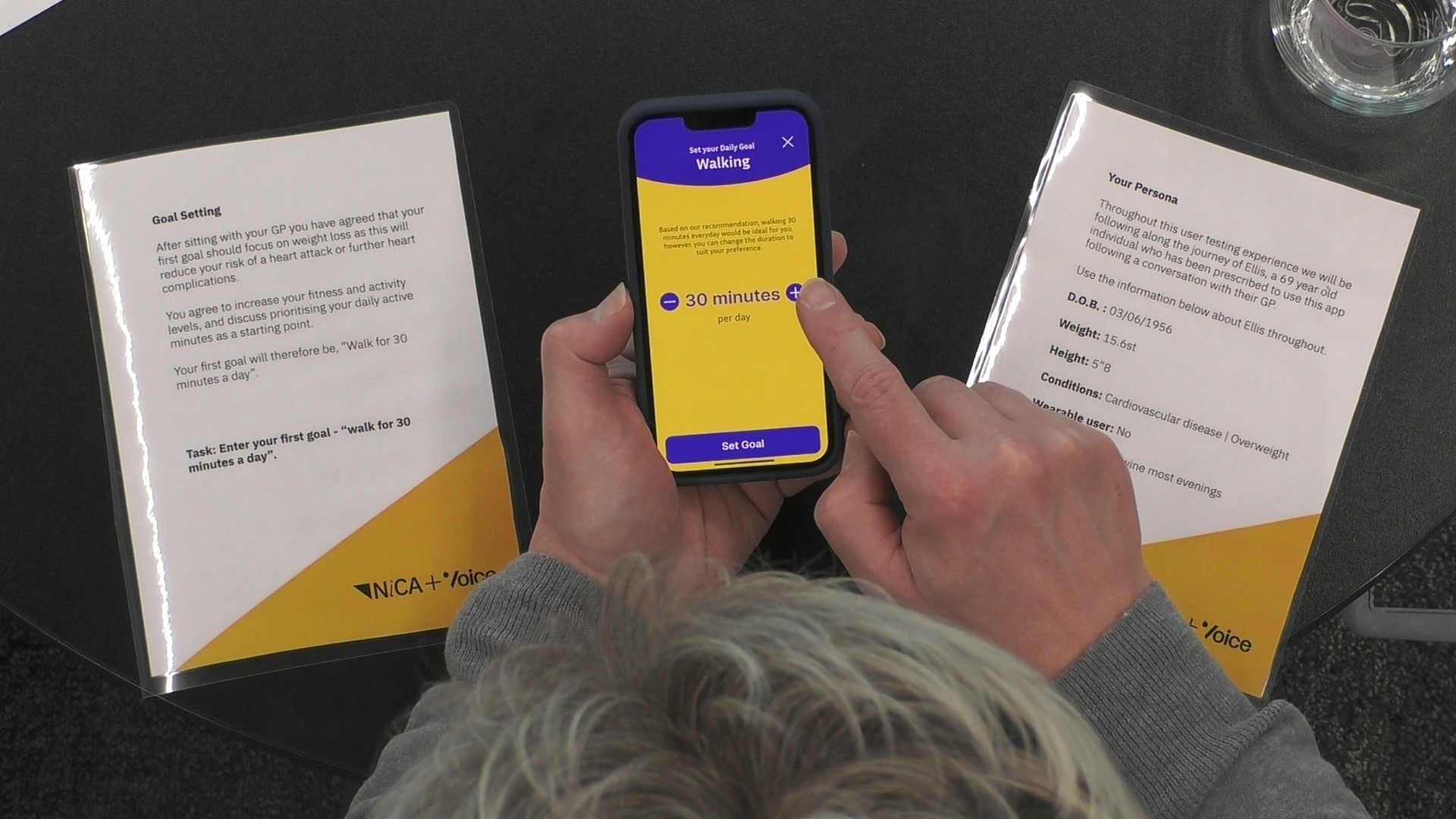
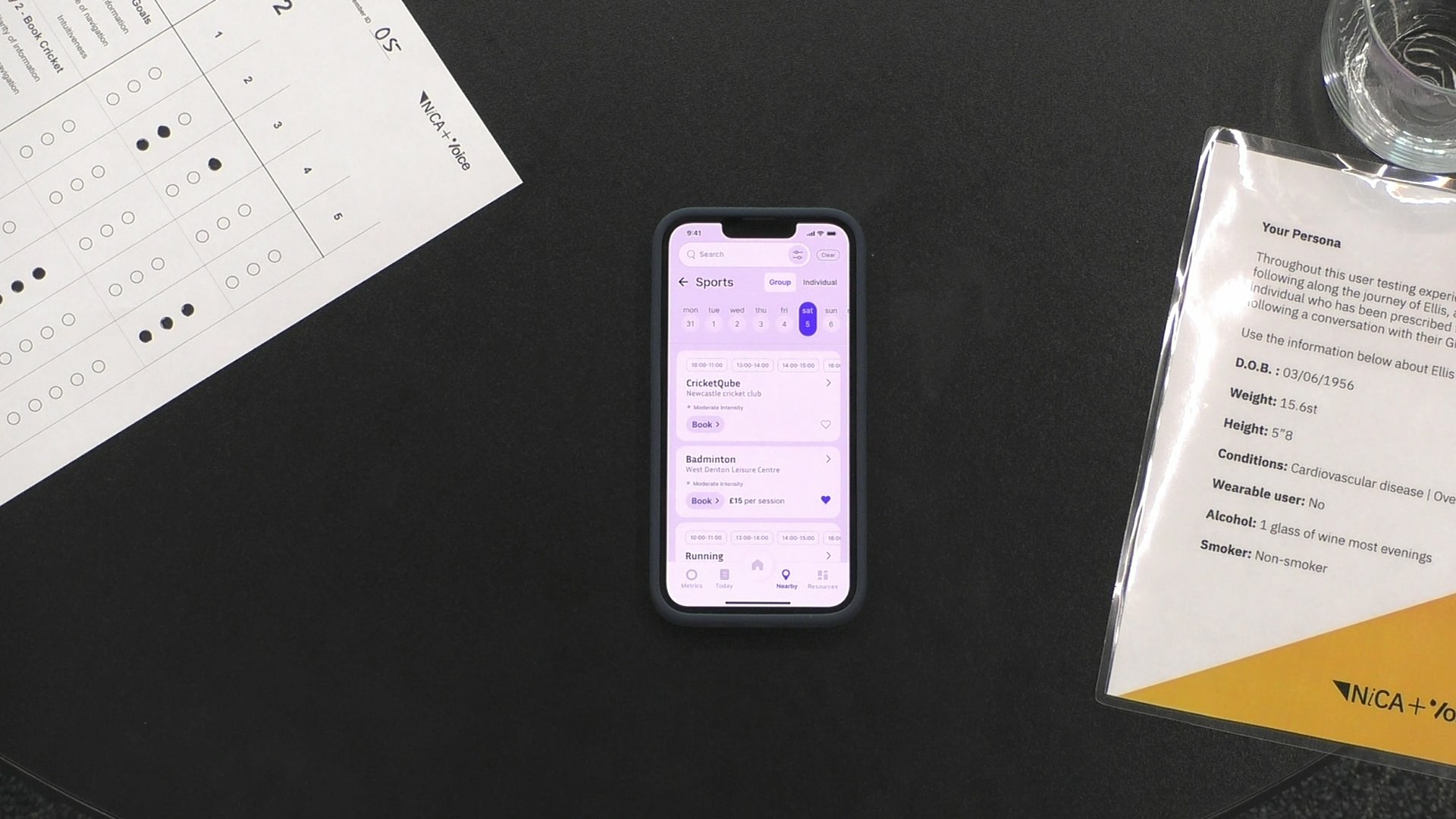
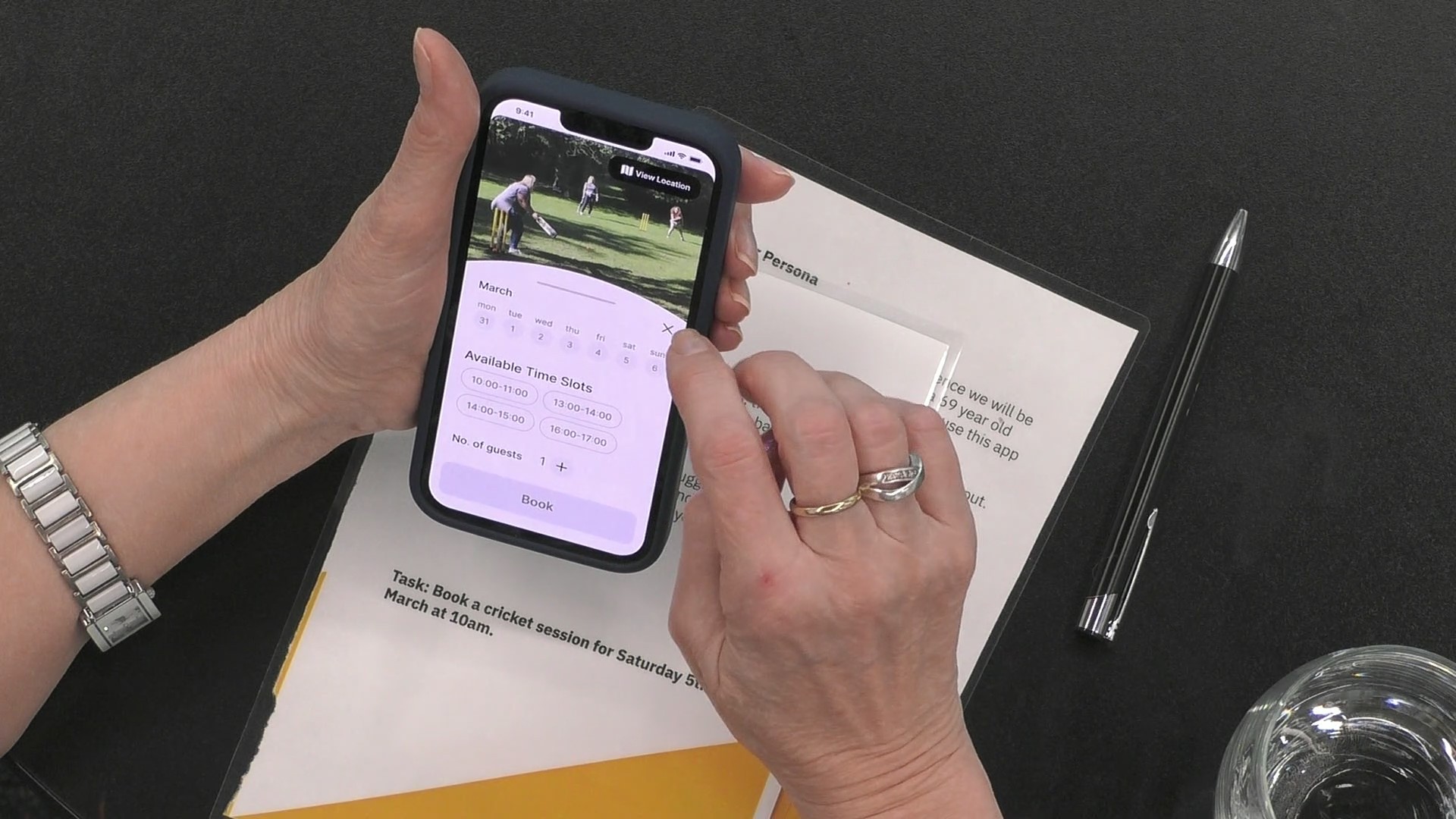
Alongside UXR, tested & analysed feedback from ~9 users to evaluate UX, task completions and usability (SUS)
Design Phase 2
Refined high-fidelity prototype based on feedback
Usability Testing 2
Tested & analysed feedback. Significantly improved UX, task completions and usability (SUS)
Hand-off
Final prototypes and style guide documentation handed over for development
User Research & Analysis
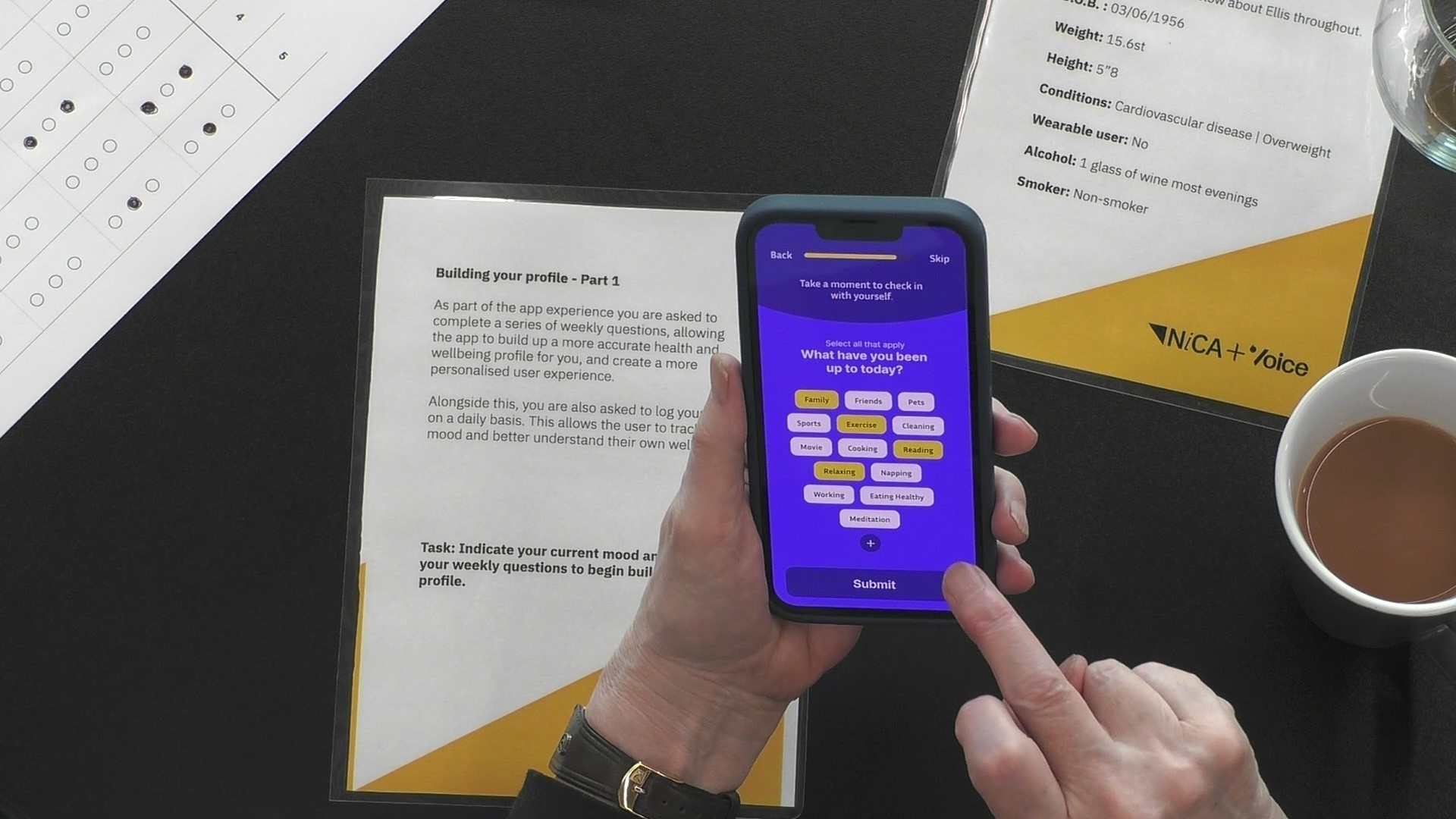
108 people (ages 31–85) with chronic conditions shared their opinions, motivations and frustrations with existing digital solutions. Through analysis, we identified the key topics to probe into more deeply in focus groups and challenge unfounded assumptions:


UX + UI Design
Tracking Progress
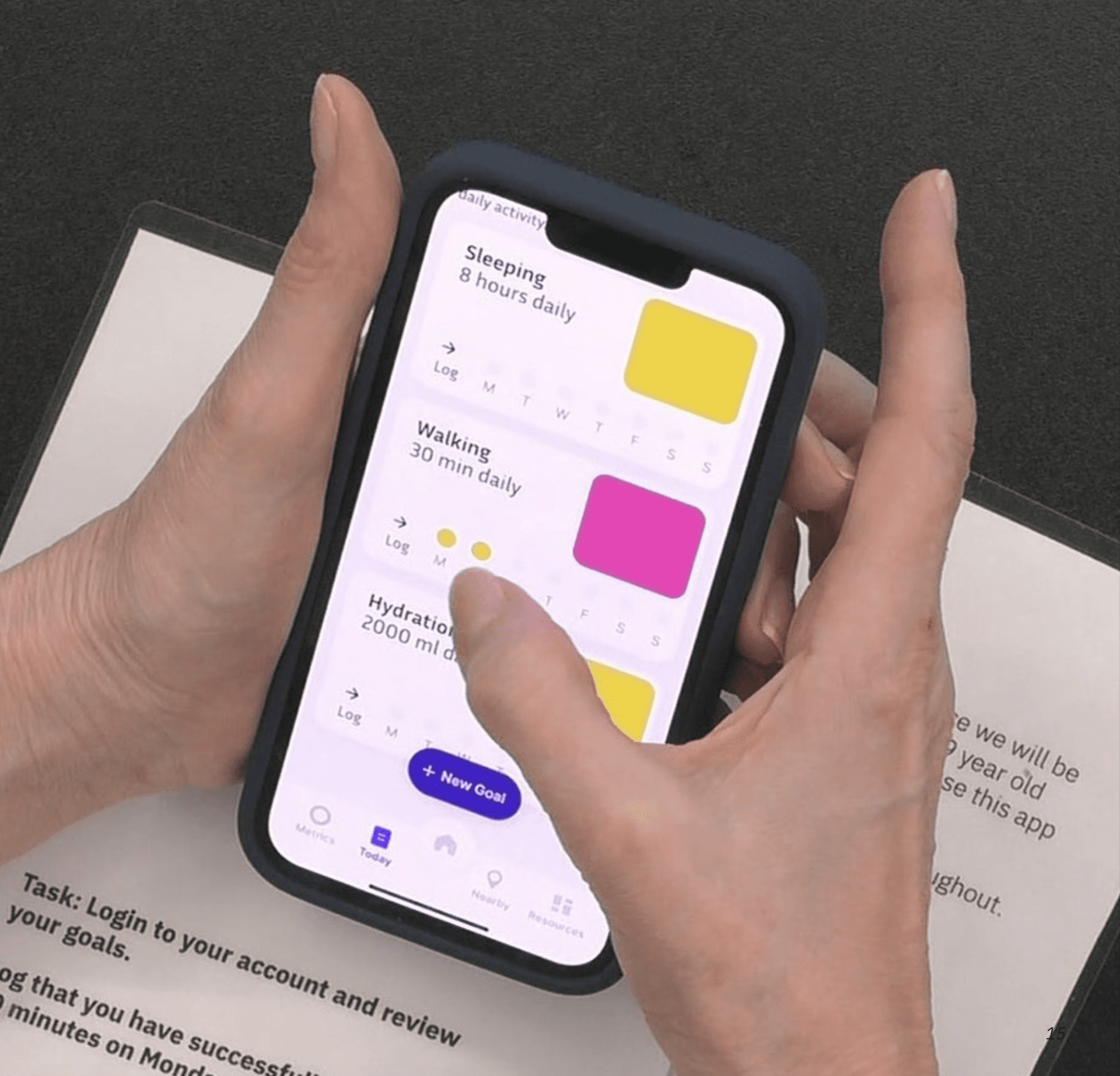
Warm tone, easy to understand data visualisations to summarise progress and enable informed decisions. UI is accessible even for users who aren't fitness experts. User Insights from usability testing R1 revealed: • Progress is high-level and many wanted to see where the scores are coming from. • Active days focus on whether a goal is finished or not - some found this quietly demotivating for declining capacity.
Tracking Progress (Iterated)
✅ Refined data visualisations to shift focus of progress from goal completion to making progress. Reduces burden to be consistent. Impact measured in Usability testing R2: Users felt positive and most understood the progress on first read: user comprehension was 90% (min 79%)
AI Insights and Goal Suggestion
AI Summary is prioritised on home. When setting a goal, there is flexibility to choose between a custom or suggested goal to maintain user autonomy. User Insights from Usability testing R1: • AI insights suffered from low trust (lack of transparency on how much data are the insights based on) • Tooltip hid the explanation one click away.
AI Insights and Goal Suggestion (Iterated)
✅ Utilised the logic of low, moderate, high confidence AI summary from system architecture and made it visible in the frontend UI with chips. ✅ Visible origin of AI suggestion (past data and NHS guide) at the point of decision, not one click away, to improve perceived trust and more clarity. Impact measured in Usability testing R2: • Overall confidence in AI suggestion: nearly 79%. • User trust in AI suggestion: 40% increase in opting for suggested goal over custom goal • Reduced Time-to-Value: Time taken to set a goal (from avg 30 s to ≤ 22 s)
Regulations and Disclaimers
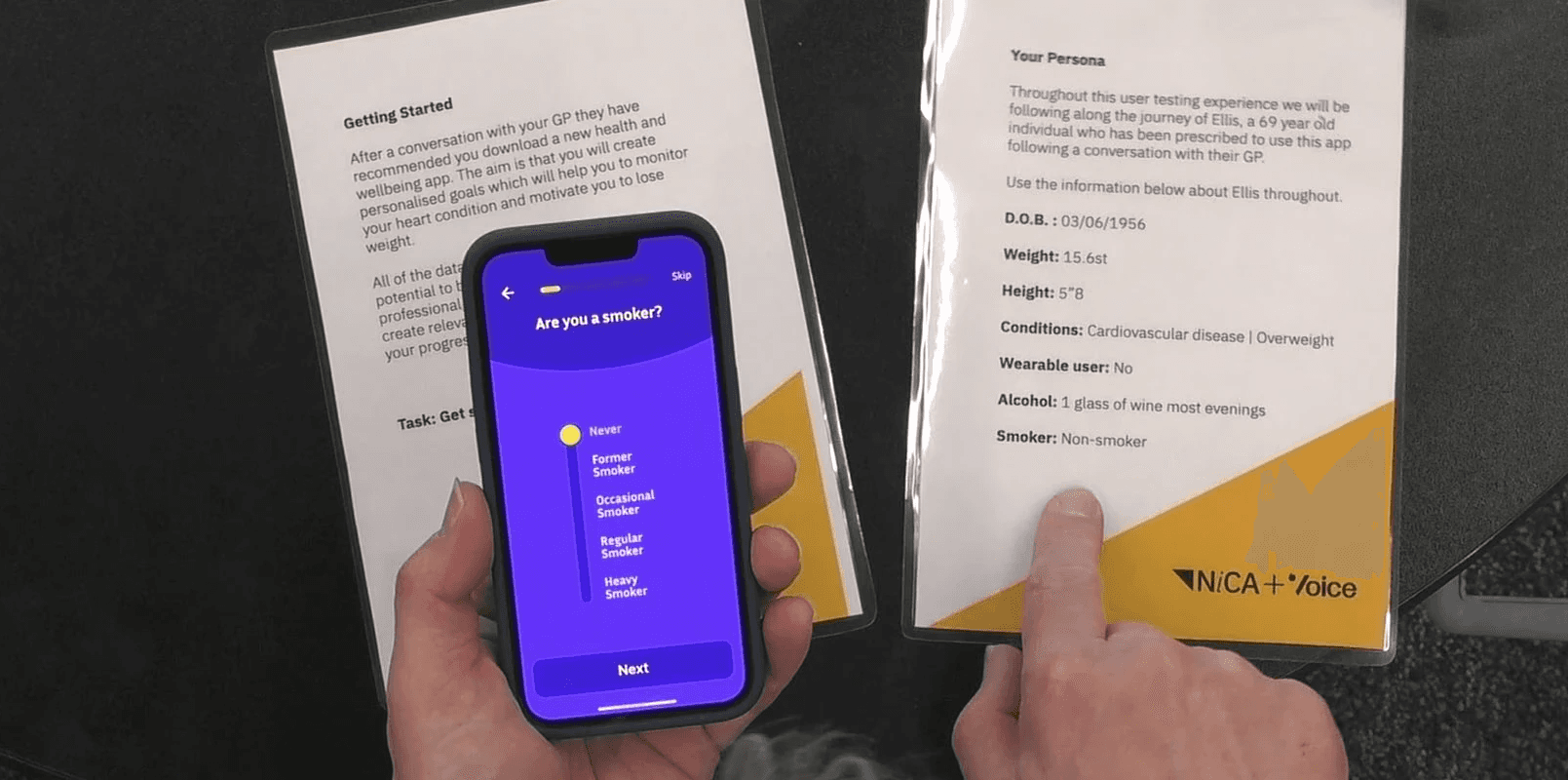
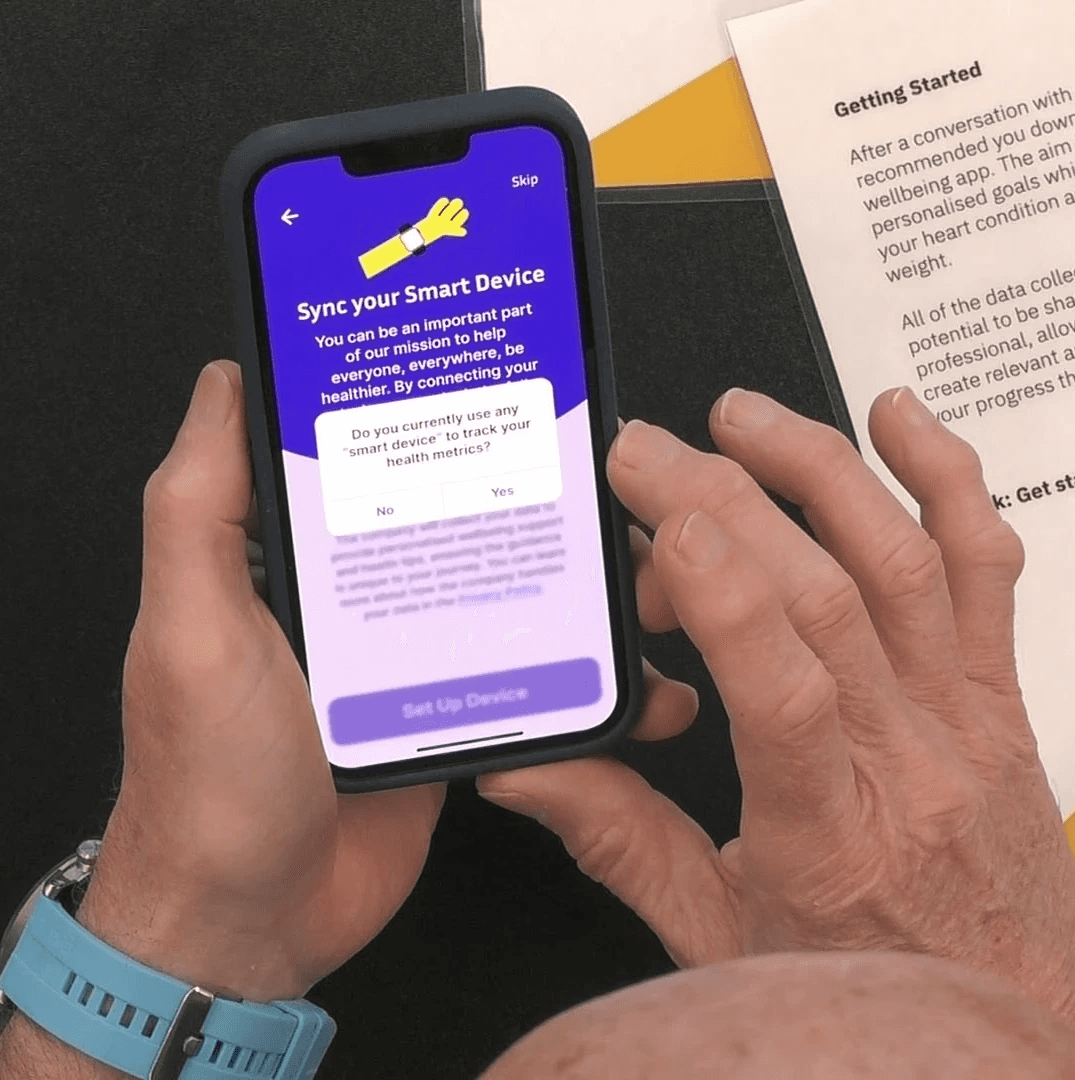
During onboarding, users must fully understand what’s included and what’s not before they fill out any information.
Regulations and Disclaimers (Iterated)
✅ For compliance, a short description about each regulated instrument is included and answers are mapped with regulatory standards. This helps to establish a baseline during clinical appointment. Design iterations and impact: • Improved data capture quality by tagging each option with 0-1 or L1-L5 scale
Usability R1 to R2